Posts

Showing posts with the label Incident Command

Police Drones: Fighting The Urge to Manage From Afar
Image
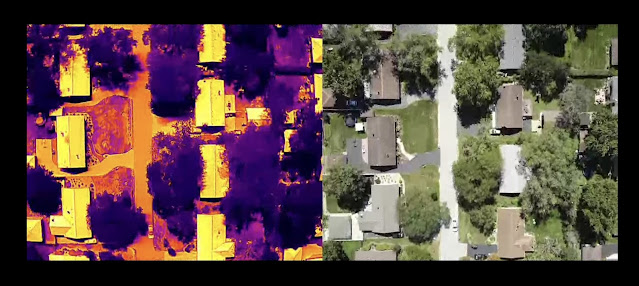
Drone use is exploding in American law enforcement. Especially programs that push out “Drones as First Responders” (DFR) — where sUAS are put up to scout locations before cops on the ground ever enter the area. But what I’m going to discuss below also applies to all remote-controlled tactical searches or surveillance. Most, if not all, drones are capable of sending live-stream video to command posts, Real Time Crime Centers (RTCC), Joint Ops Centers, or ground units. Pretty neat, huh? You can imagine the huge wall of screens, right? Let me tell you the downside here: With this sort of immediate feedback being shared to off-scene commanders, it has the potential tendency for those bosses to over-exert their command-and-control on operators in the field. DFR & RTCC programs both run the risk of doing such a great job at collecting information that commanders may feel a need, desire, or responsibility to (micro-)manage from afar. We need to balance this awesome technology that keeps e...

Incident Command: the big picture

Image
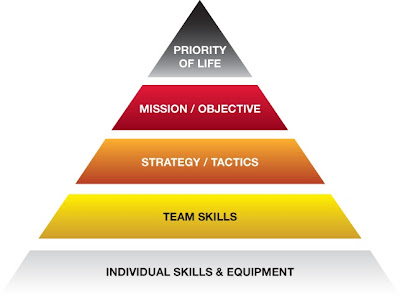
Over the past few weeks, I have been re-engineering  Police Incident Command according to   The Illinois Model  law enforcement operations system ( LEOpSys ). Most of the ideas aren't earth-shattering, but they suggest some small adjustments to the nationally-mandated program.  The first several posts lay some foundation into our vision of what IC should be.  This is the fifth and final installment.  Click on the  Incident Command label  for all posts in this 5-part series. *** Incident Command is not about dry-marker boards. It's not about comfy mobile command posts. Or organizational charts. It's not about pocket cards or checklists either. Incident Command is a balance between leadership and management while problem-solving in the face of crisis. It brings together problem analysis, goal-setting, and hasty planning. And we believe The Illinois Model LEOpSys is the answer. Officers cite the SitRep section as the most usefu...

Incident Command: the team cohesion aspect of the SitRep

Image
Over the past few weeks, I have been re-engineering  Police Incident Command according to   The Illinois Model  law enforcement operations system ( LEOpSys ). Most of the ideas aren't earth-shattering, but they suggest some small adjustments to the nationally-mandated program.  The first several posts lay some foundation into our vision of what IC should be.  This is Part Four.  Click on the  Incident Command label  for all posts in this short series. *** In the last part , I assembled the first two portions of the  Situation Report ...or SitRep. These portions are the Incident Category and the Location .  The SitRep is a quick method for briefing, updating, and directing responders to a police problem. It identifies the problems, prioritizes any intended solutions, and gives a basic plan for implementing the course of action.  In this piece, I will add on the remaining portions of the SitRep:  Priority of Life,...

Incident Command: Communicating the Situation and Location

Image
Over the past few weeks, I have been re-engineering  Police Incident Command according to   The Illinois Model  law enforcement operations system ( LEOpSys ). Most of the ideas aren't earth-shattering, but they suggest some small adjustments to the nationally-mandated program.  The first several posts lay some foundation into our vision of what IC should be.  This is Part Three.  Click on the  Incident Command label  for all posts in this short series. *** If "communication problems" are consistently cited during critiques and debriefs of police incidents and training scenarios, why aren't we doing anything about it? We too were frustrated and began tracking the stem of our communication issues. We found several common hiccups (to be kind) and addressed them with a clear and concise summary report. We adopted the term Situation Report ...or SitRep. In short, the SitRep is a quick method for briefing, updating, and directing responders...

Incident Command: a problem-solving approach

Image
Over the course of the next few weeks, I will be re-engineering  Police Incident Command according to   The Illinois Model  law enforcement operations system ( LEOpSys ). Most of the ideas aren't earth-shattering, but they suggest some small adjustments to the nationally-mandated program. These first several posts lay some foundation into our vision of what IC should be. Click on the  Incident Command label  for all posts in this short series. This is Part Two. *** Incident Command is all about solving problems. Unfortunately, that's an idea that can be lost in complicated policy and systemic bureaucracy. Because public safety "problems" are so diverse, officials have found it to be difficult to apply a singular process in solving them. We contend The Illinois Model LEOpSys is a universal policing system that has effective application as a template for Incident Command for any and all problems. Police problems come in all shapes and siz...

Tactical Supervision: Coaches and Chessplayers

Image
Over the course of the next few weeks, I will be re-engineering  Police Incident Command according to   The Illinois Model  . Most of the ideas aren't earth-shattering, but they suggest some small adjustments to the nationally-mandated program. These first several posts lay some foundation into our vision of what IC should be. Click on the Incident Command label for all posts in this short series. This is Part One. *** Public safety emergency response sometimes looks like an athletic contest ; other times it looks like a boardgame . Incident commanders, tactical/strategic commanders, line-level supervisors, and responders must all understand how leadership and management factor into these two different operational environments. The analogy of the sports coach versus the chessplayer can be a powerful beginning to a more effective police response. Sports Team athletic contests like basketball, hockey, or rugby (my favorite) are fast-paced games with a running c...