Posts

Showing posts with the label police

Police Intelligence's Three-Headed Monster
Image
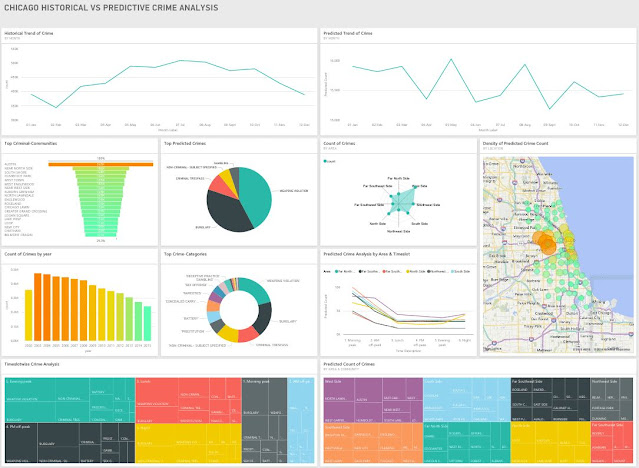
Dashboard from Chicago Police data There's a three (3)-headed monster required for good intelligence work: DATA ANALYTICS & STATISTICS This is where most minds go when thinking of intel or analysis. It's the collection, sorting, crunching, & figuring-out of data & information. This is surely the most technical. It's also becoming more & more automated (think: less human interaction with data). PRESENTATION & DATA VISUALIZATION But how should we present our findings? Written narrative? In-person briefings? Tables? Maps? Graphs? Dashboards? Animations? We must understand how human brains make sense of data visualization. We must ensure that the format or medium is appropriate for conveying the particular content. If the reader or listener doesn't understand it, we've failed! OPERATIONAL EXPERIENCE I put this last, but it's the most important. Is the published information valuable to the "doers?" Can they operationalize it? Is it answe...
Police Drones: Fighting The Urge to Manage From Afar

Image
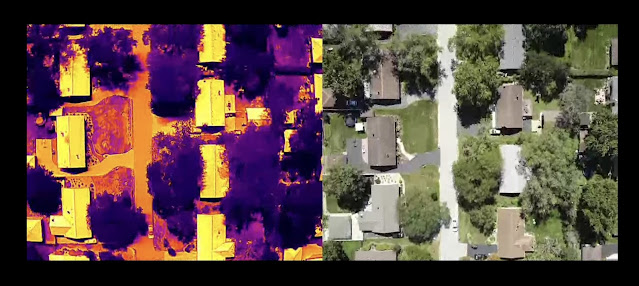
Drone use is exploding in American law enforcement. Especially programs that push out “Drones as First Responders” (DFR) — where sUAS are put up to scout locations before cops on the ground ever enter the area. But what I’m going to discuss below also applies to all remote-controlled tactical searches or surveillance. Most, if not all, drones are capable of sending live-stream video to command posts, Real Time Crime Centers (RTCC), Joint Ops Centers, or ground units. Pretty neat, huh? You can imagine the huge wall of screens, right? Let me tell you the downside here: With this sort of immediate feedback being shared to off-scene commanders, it has the potential tendency for those bosses to over-exert their command-and-control on operators in the field. DFR & RTCC programs both run the risk of doing such a great job at collecting information that commanders may feel a need, desire, or responsibility to (micro-)manage from afar. We need to balance this awesome technology that keeps e...

Police Real-Time Crime Centers: Challenges in Sharing the Collected Information

Image
Real-Time Crime Centers are “the shiny new thing” in policing. RTCCs are hubs of time-sensitive information. They receive data & alerts from all sorts of sources — license plate readers, surveillance cameras, proximity alarms, gunfire detection systems… Imagine a 911 call going to a dispatcher who then broadcasts an emergency on the police radio. While cops are responding via squad cars, analysts or cops in RTCCs may be checking area traffic or surveillance cameras to better inform those in the field of what’s happened or is happening. In real time. A picture is worth a thousand words, right?? Like an image of a shooter’s clothes. Or a drivers license photo of a missing elderly person? Or a screenshot of a fleeing offender’s car? Or an overhead map? A challenge is in how to securely convey this information to first responders. Do your Computer Aided Dispatch Systems (CADS) or squad car computers allow for sending & receiving photos? What about if you assign out mobile photos or...

Consolidation is the Future of Crime & Intel Analysis

Image
DuCOMM, in DuPage County Illinois For decades, small and mid-side public safety agencies have been consolidating their communications centers. The costs (financial and other) associated with maintaining technology and staffing 911 call-takers and dispatchers have driven police and fire departments to share the burdens. This is a clear example of economies of scale . Most simply, the overhead costs are spread out across multiple jurisdictions. The financial advantages are so obvious that some governing bodies have mandated such consolidation. As a police officer who works under a consolidated communications system, and who has also worked under an in-house program (where each city maintains their own isolated 911 dispatch center), I attest the quality of a consolidated system is significantly higher. This has little to do with the quality of the people, but rather the efficiencies of the  system that includes the people. It's a system where workload is (or can be) redistributed, w...